Ángel Alonso Tomás
EN

Carenas, 24 January 1942

Ángel Alonso Tomás

Theatre director, playwright, screenwriter and television director. He founded the Sala Villarroel, devised and directed Planeta imaginari, gave Arrabal his first world premiere in Spain and filled the theatres of Barcelona for more than thirty years.

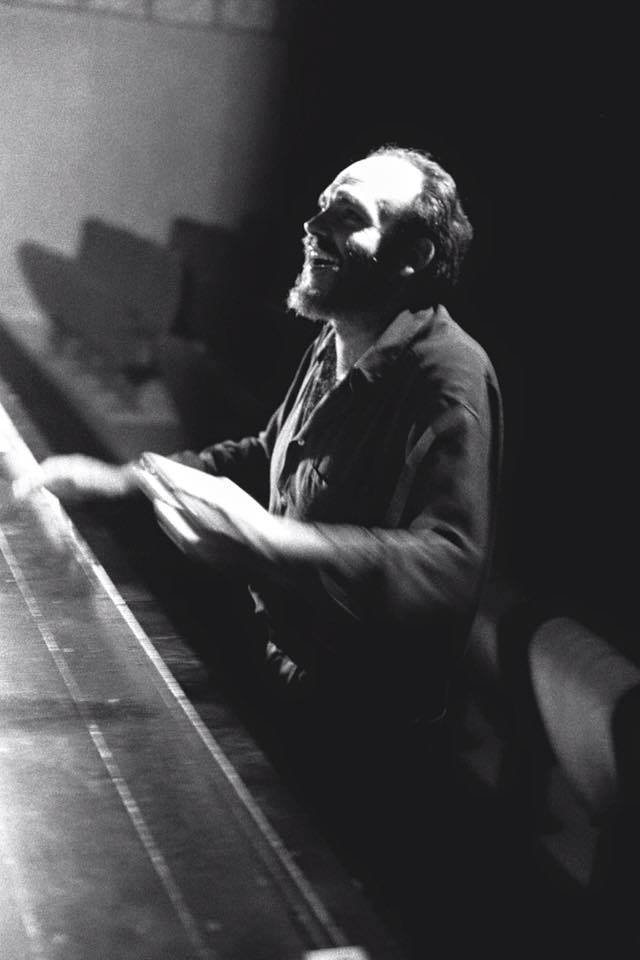
Ángel Alonso, sitting on the edge of the stage of an empty theatre, laughing with his arms stretched out in front of him
Ángel Alonso at the edge of the stage. Personal archive.21

A career

Sixty years on stage

Shows premiered
78Between 1962 and 2016 · 22 from his own texts
Performances
7,843Counted one by one
Spectators
2,823,848With recorded box office · more than 3.4 million estimated
Guinness World Record
14,797Seats · Palau Sant Jordi, 27-XI-1999

Some careers are explained by a single stroke of luck. His is explained by four successive lives that scarcely resemble one another.

The figures have been counted performance by performance: 7,843 performances, of which 6,821 with recorded box office, and 2,823,848 recorded spectators. Adding in the performances whose audiences were never registered — school tours, one-off dates, campaigns — estimated attendance exceeds 3,400,000.22

He began by directing anti-Franco cabarets that the censors banned and that were performed in secret: Napalm, Las Cebras, Cabaret 70. He then opened a parish hall in the Eixample, today the Villarroel Teatre, and turned it into the driving force of Catalan independent theatre, with a Triple A bomb going off in its foyer along the way. On television he invented a children's programme, Planeta imaginari, that treated children as adults and that an entire generation remembers. And when he might have retired into respectability, he mortgaged his flat to stage a comic strip about Spain's compulsory military service, Historias de la puta mili, and broke every audience record in the Spanish theatre with La extraña pareja.

One thread runs through it all, and he has named it: “How would Camus do it?”

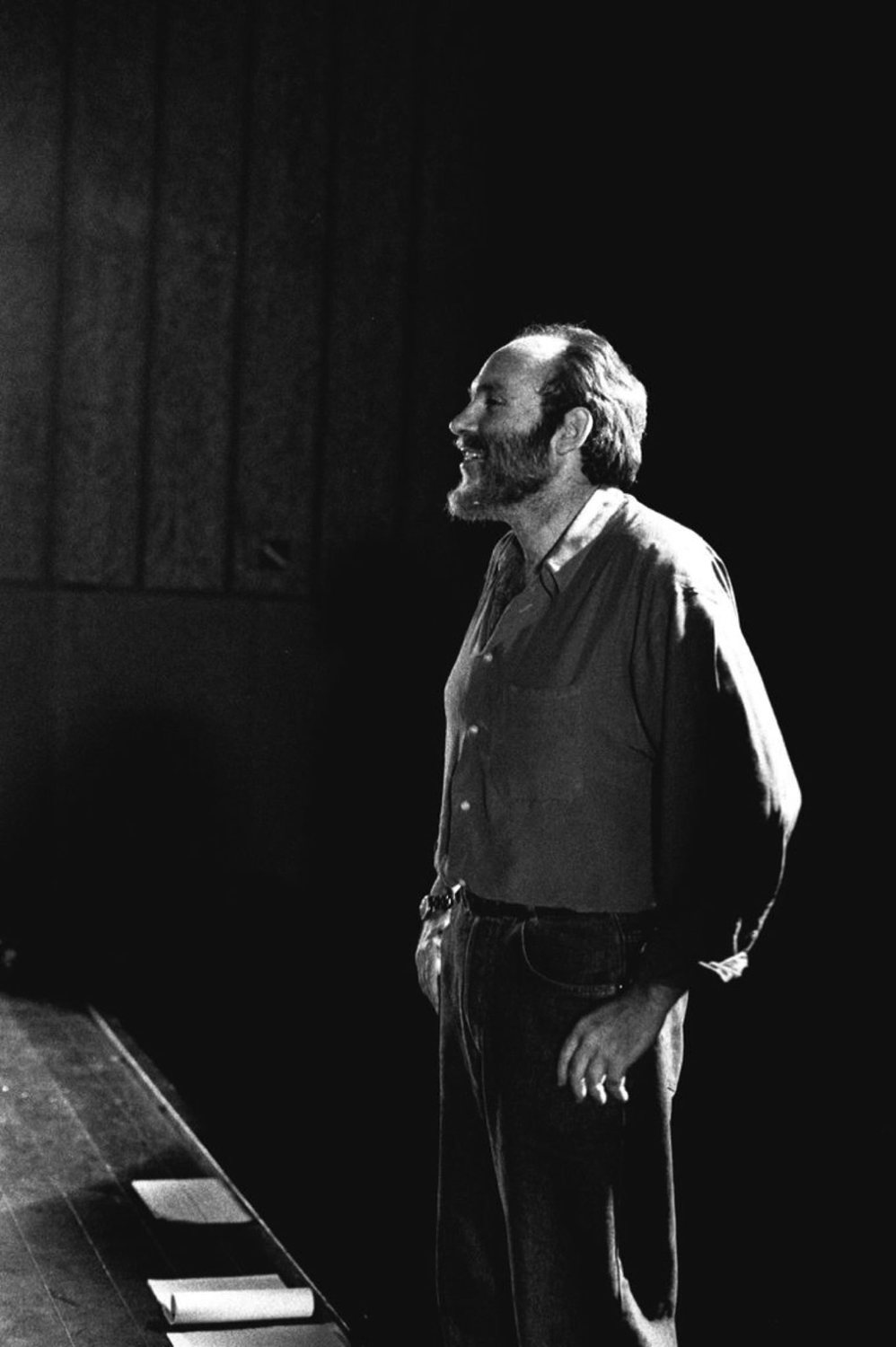
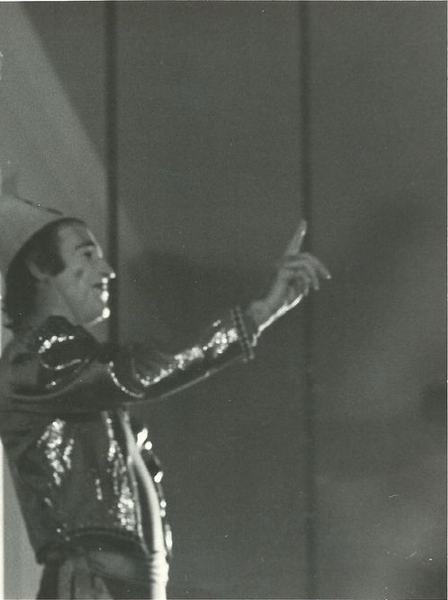
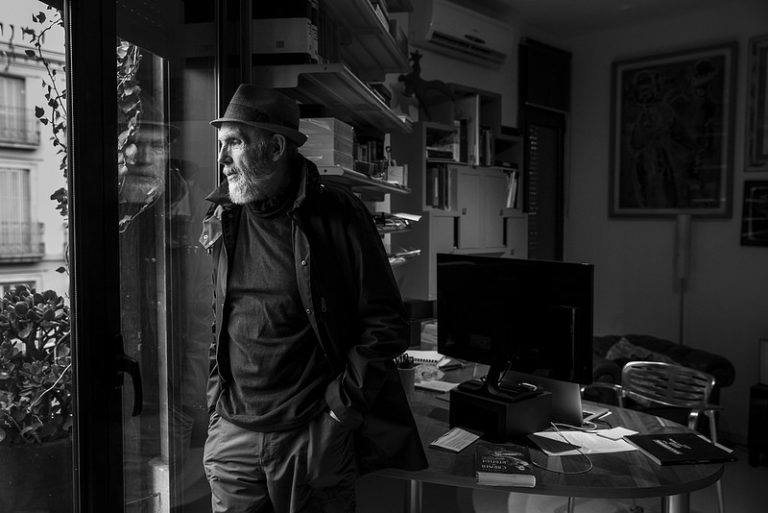
Ángel Alonso standing in profile at the edge of the stage, side-lit against a black background
Sixty years of the craft come down to this stance: standing, at the edge of the stage, watching.

Biography

From Carenas to the Campo de la Bota

He was born in Carenas, a village of cellars dug out beside the River Piedra, near Calatayud, on 24 January 1942. He has described the distance he has travelled in a single sentence:

When I was born, the light came from an oil lamp. Water was brought up from the irrigation channel on pack animals and carried in pitchers to the storage jar. The lavatory was the yard. And now I live in the universe of big data and quantum technology. All in one generation.

In 1946 the family moved to Barcelona with the first waves of postwar migration and settled in La Maresma, a handful of houses beside the Horta streambed, on the edge of the city. There, from the bridge on Carrer Pere IV, he learnt what kind of country he had been born into: below it passed the roped lines of prisoners the soldiers were taking to be shot at the Campo de la Bota.

A bridge from which an army lorry would disgorge a roped line of prisoners whom soldiers marched down the streambed to be shot at the Campo de la Bota execution ground. We children followed behind, at a distance because the soldiers would drive us off, and once they had finished shooting them and were loading them onto a lorry that was not even covered, we would pick up the bullets to play with afterwards. I was six years old, and the roped lines went on until '52, when I was already ten.32

He was taught by a Republican schoolmaster whom beatings in prison had left lame and ill, and who taught every age group in a classroom split by a partition. It was that man who convinced his parents that the boy should go on with his studies. He took his baccalaureate at the Instituto Milà i Fontanals, where he overlapped with Joan Manuel Serrat, and on leaving went to work as an apprentice electrician.16

At the factory, some of the older men began giving him books and asking him to carry parcels from one section to another. One day the police took them away and they did not come back. Without knowing it, he had spent months acting as the courier for an anarchist group. Among those books was La isla de los pingüinos, by Anatole France, which twenty years later he would take to the stage.

Theatre and Camus

Theatre came to him late and by chance: during his compulsory military service, through a fellow conscript from Barcelona who acted with amateur companies. In those same months he read El extranjero, by Albert Camus, for the first time. He has never stopped reading it.

My “How would Camus do it?” is Billy Wilder's “How would Ernst Lubitsch do it?”. A priceless guide for choosing or discarding ideologies, intellectuals, manifestos and doctrines.

On being discharged he set up the group el Galliner with some friends, rehearsing at the Peña Cultural Barcelonesa because it had a theatre. Out of it came, between 1963 and 1970, a run of shows that would be unthinkable today and that at the time was simply dangerous: El deseo atrapado por la cola, by Picasso; El asno electrónico, by José Ruibal; América, América, a collage against imperialism; Las Cebras; Napalm, on Vietnam; Cabaret 70. Several were banned by the censors and were performed in secret, on clandestine tours.

He studied directing at the Escola d'Art Dramàtic Adrià Gual, after a period at the Institut del Teatre. And in 1971 he spent a year in London. He arrived with no money and was taken on as a gardener at a drama school, which allowed him to move about the premises and slip into rehearsals. He pointed out some errors of music and costume in one production, was offered an advisory post and ended up teaching at the Mountview Theatre School, giving a postgraduate seminar on Spanish theatre and supervising productions of Marat-Sade, by Peter Weiss, and La casa de Bernarda Alba, by García Lorca.22 He had free access to the rehearsals of the Royal Shakespeare Company.

Seeing his own country from outside was what made him come back. He returned with a precise idea of what he wanted to do and the certainty that in Barcelona there was no place to do it in. So he opened one.

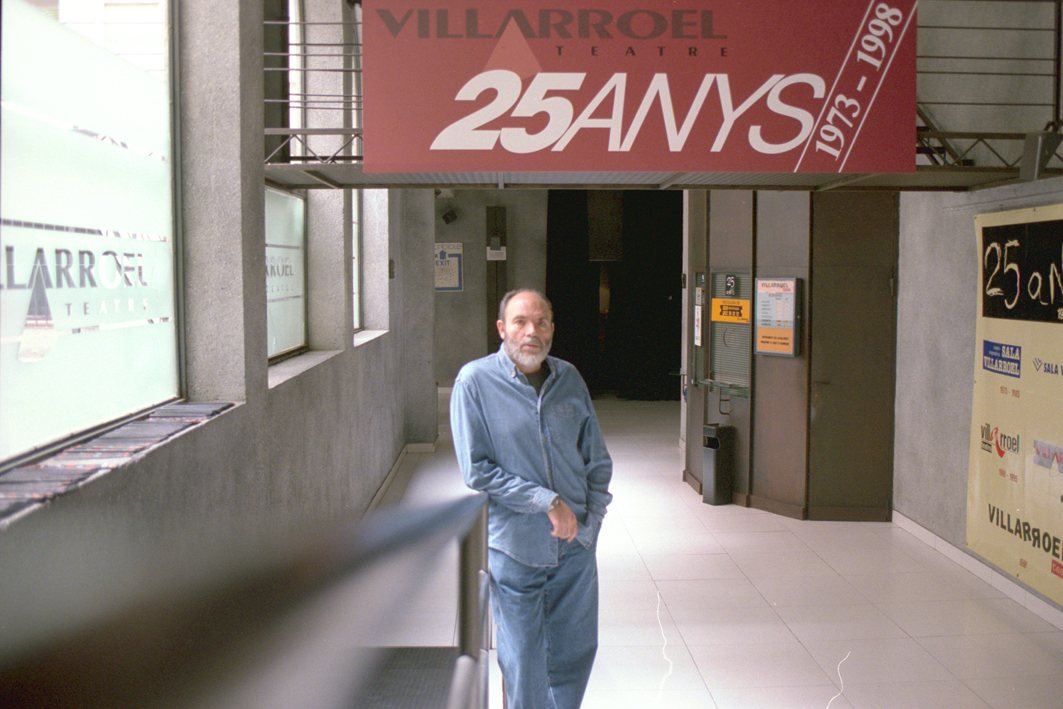
Ángel Alonso walking through the foyer of the Villarroel Teatre beneath a banner reading VILLARROEL 25 ANYS 1973-1998
The foyer of the theatre on its twenty-fifth anniversary, in February 1998.

Sala Villarroel · from 1972

Theatre for those who had no theatre

In 1972, aged thirty and just off the plane from London, he took charge, together with Rafael Gil, of the programming of a parish hall on Carrer Villarroel. It was offered to him by mossèn Llopart, the rector of Sant Josep Oriol, a priest who kept a clandestine printing press in the premises next door. “Leaflets were printed there and the militants carried them out by mingling with the audience as it left the theatre,” he has recalled.36 During the war those premises had belonged to the anarcho-syndicalist CNT.16 Neither fact was an accident.

As a theatre it was a dream: it had exactly the right proportions and dimensions to begin an ambitious undertaking from a position of modesty.1
Ángel Alonso. Translated from the Catalan

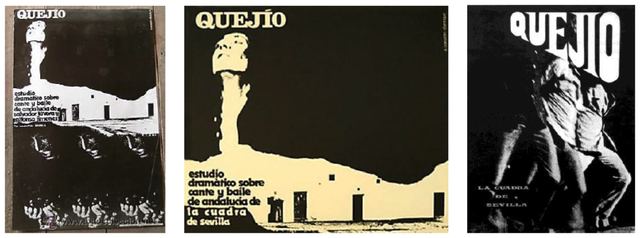
Shortly afterwards the cooperative was set up with Adolf Bras, Alfons Guirao and José Antonio Ortega. The theatre opened on 26 January 1973 with Quejío, by La Cuadra de Sevilla, in the hands of the four cooperative members.20 In January 1988, after a complete refurbishment, it was renamed Villarroel Teatre.

The Centro de Documentación de las Artes Escénicas describes it as one of the most important presenting venues of the independent movement, alongside the Sala Cadarso in Madrid.14 It was the launch pad for Dagoll Dagom, Vol-Ras, El Tricicle, Kràmpack and T de Teatre14, and more than a hundred Spanish and foreign companies passed across its stage, among them Comediants, La Cuadra de Sevilla and Tábano.

He programmed Edward Albee, Fernando Arrabal, Bertolt Brecht, Dario Fo, Ramón Gil Novales, Alfonso Sastre, Miguel Delibes and Shakespeare, among others. And performing there were Miguel Gila, Pepe Rubianes, Eduardo Pavlovsky, Karra Elejalde, Charo López, Anna Lizaran, Lola Herrera, Rafael Álvarez “El Brujo”, Amparo Moreno, Nina, Gloria Muñoz and José Sacristán. The venue also housed the Cine Club Avance and, in the spring of 1975, the I Muestra del Teatro Independiente, the first showcase of independent theatre, described by the Ministry of Culture as the first concrete attempt to open a broader theatrical dialogue among those running the independent scene.14

The film club had been running at 87 Carrer Villarroel since before the theatre. In February 1971 it was showing Sobre la fiesta y los invitados (A Report on the Party and the Guests), by Jan Němec — banned at the time in Czechoslovakia — and Un verano en la montaña, by Peter Bacsó.2 Eastern European cinema in the Barcelona of 1971.

Censorship from the inside

Within the cooperative, Alonso was left with the most thankless part. His description of the mechanism is more precise than the received idea of those years:

I was the one who dealt with the permits. Every single performance required a complicated permit […]: advance payment of the technicians of the Falangist state trade union and the respective authorisations from the Ministry of Information and Tourism, from the police and from the Civil Government.

Censorship existed, but it was a bureaucratic mechanism. In those days they did not ban things: they authorised them.
Ángel Alonso. Translated from the Catalan1

In November 1992, on its twentieth anniversary, the theatre had programmed 207 shows under the unbroken management of the same four people, and was the Catalan theatre with the largest attendance.10 Adolf Bras gave at the time the figure that best sums the house up: the subsidy worked out at some 350 pesetas per spectator, against the 7,000 or 10,000 of Barcelona's public theatres and the more than 100,000 of the Liceu.10 “Either we fill the house night after night or we disappear.”

In February 1998, presenting the events for the twenty-fifth anniversary, Alonso — co-manager of the theatre together with Adolf Bras — publicly denounced the end of an era in Catalan theatre.11

From those years he remembered two details worth a whole treatise: that the Falangist state trade union obliged them to employ a prompter even when the performer on stage was a mime — he had himself written a forty-minute mime piece that the censors cut down to five: “they didn't ban it, but there was nothing left of it”33 — and that when they submitted the papers to license the theatre the police superintendent shouted at them: “Theatre? What you people ought to be doing is giving blood.”12

They came to understand the remark in time. The policemen who attended performances as government informers began to lose their wallets when they fell asleep — sometimes their handcuffs too, and even their pistols — and every wallet turned out to contain a blood donor card.12

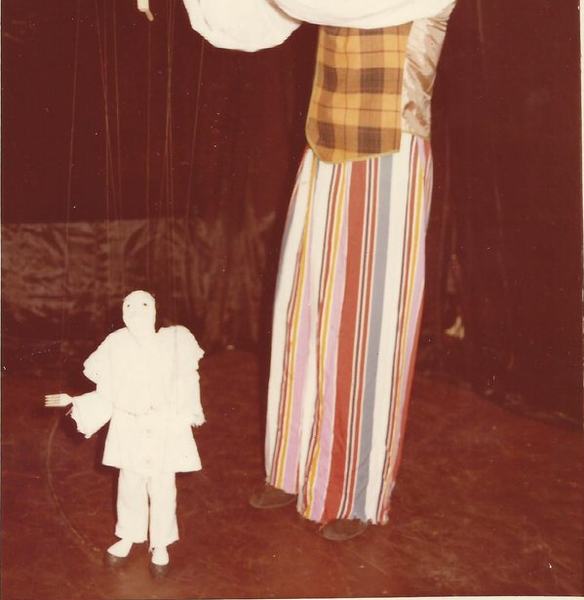
Out of the theatre came another strand of work that is rarely remembered and that reached thousands of children: the educational shows he wrote and directed for the La Caixa a les escoles campaign run by the Fundació La Caixa. Jocs, a single production with four openings between 1975 and 1978, covered the first two campaigns — 52 and 54 performances; Còmic, premiered at the theatre in 1979, took up the third with another 54. To these should be added Història del teatre, written for the schools of L'Hospitalet, and later Fabulazione and Aula d'Ecologia. Close to two hundred and fifty performances of theatre for schools.22

The theatre was also the home of the alternative movements: book launches, feminist and sexual liberation events, trade union meetings and meetings of clandestine parties. Franco Basaglia and Félix Guattari took part in the anti-psychiatry week, staying in the homes of the cooperative's members. In 1975, under the government of Arias Navarro, Alonso was one of the three people dismissed from Televisión Española on political grounds. He was reinstated in July 1976, when that government fell.22

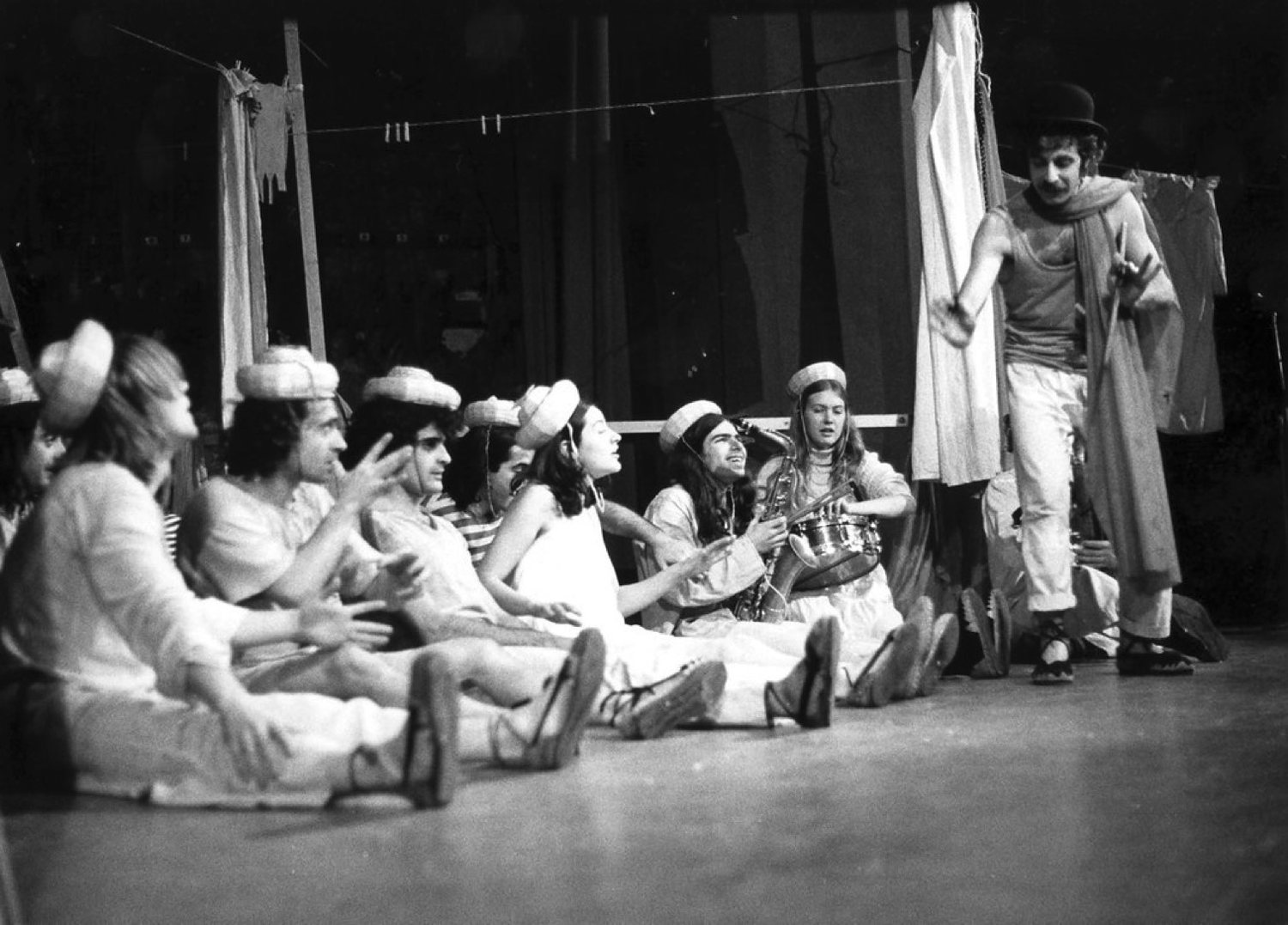
Black-and-white scene with a dozen performers sitting on the stage floor among washing lines
The theatre in the years when programming was a political act.

5 February 1977

The bomb

The box-office attendant had asked to cash up early because she was going out to dinner. Half an hour into the evening performance, an explosive device went off in the foyer of the Sala Villarroel. Playing that night was La sangre y la ceniza: Miguel Servet, by Alfonso Sastre, which had opened two days earlier.

The box office was blown to pieces and half the foyer with it. There was serious damage to the bar as well. Nobody was hurt, and that was a matter of minutes and of luck. When Adolf Bras came out into the street, a man walked up to him and said just a few words: “There'll be another one tomorrow.”

The attack was claimed by the Alianza Apostólica Anticomunista, the far-right Triple A, in a telephone call to the newsroom of Mundo Diario.3 Seven months later the same group would plant the bomb at the magazine El Papus in which the caretaker Juan Peñalver was killed.3

The performance was interrupted, but ten minutes later it resumed, at the request of the audience.3

It was not an isolated episode. There were threats on the theatre's answering machine every day, and for one season Triple A groups blocked the traffic outside the door and sang the Falangist anthem Cara al sol, with dogs, while the audience came out. After locking up, the four partners walked home crossing from one pavement to the other.

The two versions fit together. The device went off half an hour after the performance had begun, with the audience in the stalls: the blast wrecked the box office and “a piece of wood more than a metre long flew over the heads of the audience as far as the stage”. The performance was interrupted for ten minutes, and it was then that Armonía Rodríguez came on stage to say, very much in the language of the time: “Comrades, nothing has happened, let us carry on.”32 The audience asked for it to go on, and the performance ran to the end.3

These days, only some ignorant rich kid could dare to accuse the people who made the Transition of acting out of fear. Of course there was fear, a great deal of it.16
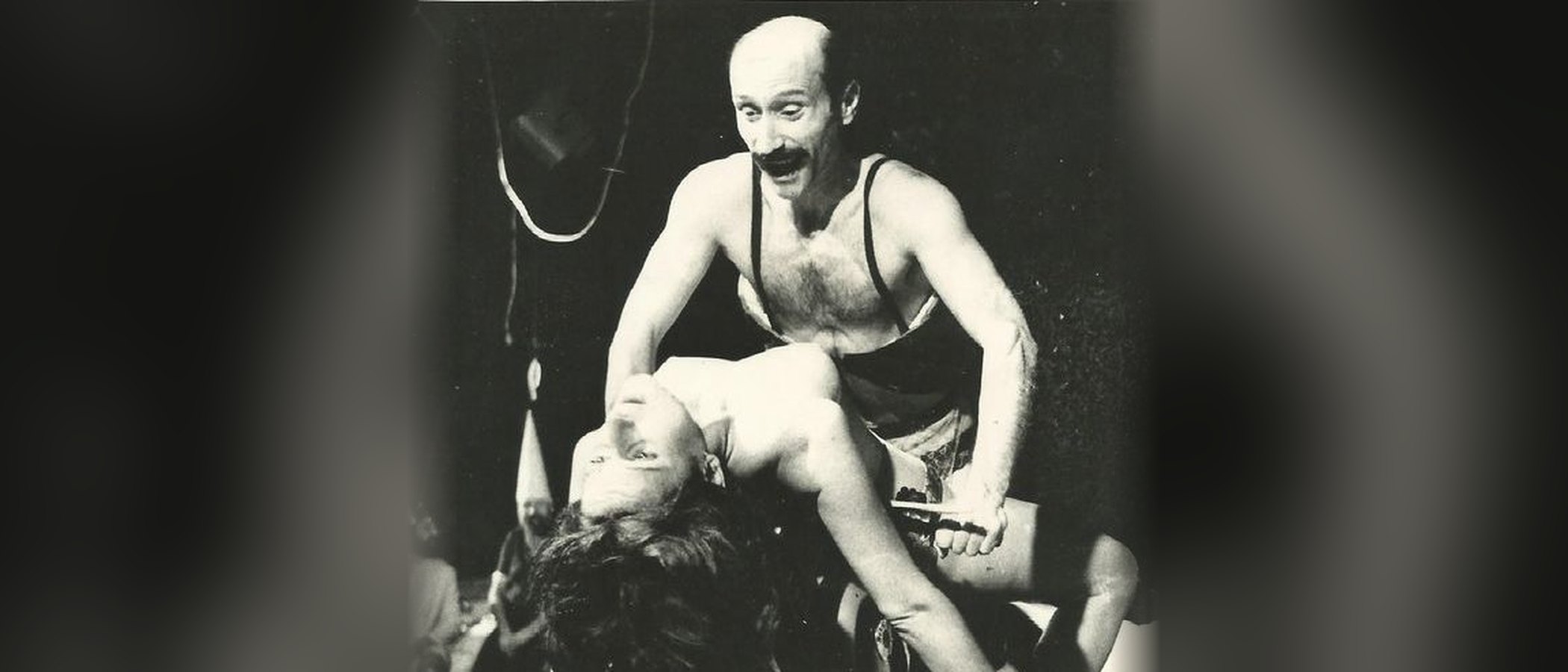
An actor with a shaved head and a moustache, sitting astride a motorcycle on stage, holds an actress reclining across the machine
Inquisición, 1 October 1980: Fernando Arrabal's first world premiere in Spain.

1 October 1980

Arrabal premieres in Spain

Inquisición was not just another opening: it was the first world premiere, commercial and absolute, of a play by Fernando Arrabal in Spain.4 The text was unpublished, written in 1978, and the author had conceived it for Nuria Espert.

And it happened because Alonso fought for it. Arrabal had the play reserved for the Comédie Française, which intended to stage it in the year of its tercentenary.

Thanks to the interest shown by Ángel Alonso, manager of the Sala Villarroel and the man responsible for the production, and thanks also to the efforts of Ángel Berenguer […], Inquisición opens tonight in Barcelona, “to Fernando's great satisfaction”.
An account of the opening night4

The direction was his.4 Alongside him, Ángel Berenguer on dramaturgy and Jesús de Haro on set design — a young painter who also showed his work in the theatre's foyer during the season — with choreography by Cesc Gelabert and music by Benet Casablancas. The review appeared two days later under a subheading that sums it up: “An extraordinary show”.5

The cast was made up of Joan Borràs as Tubal, Alfons Guirao as Carioth and Carme Sansa as Nínive.18

Arrabal was unable to attend the opening: he was filming in Montreal. He came three weeks later, on 23 October; he arrived from Paris that same afternoon and sat in the back rows. “Fernando Arrabal wept on Thursday night as he watched the performance of his play.”6

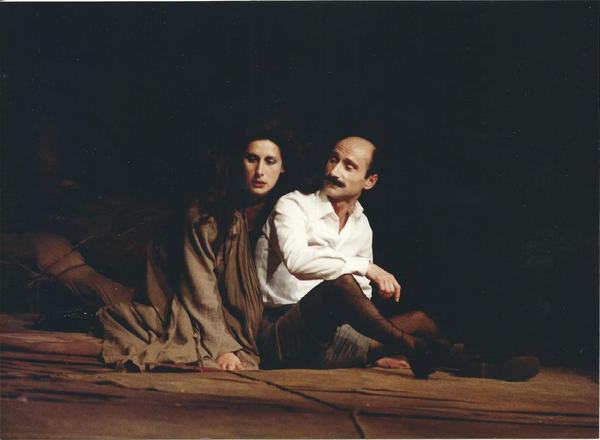
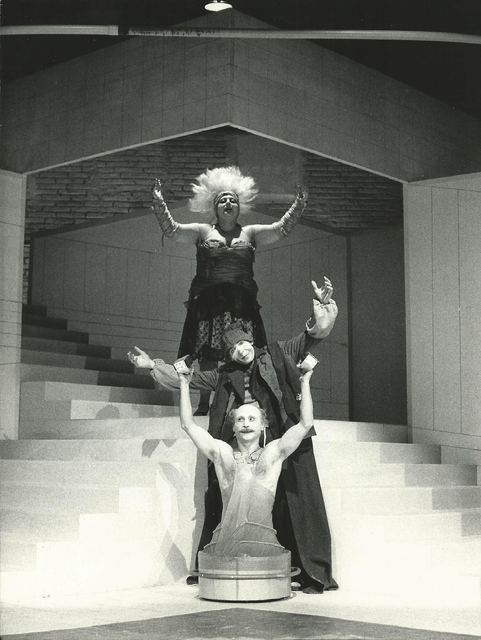
The relationship lasted forty years, and there was a second world premiere: Tormentos y delicias de la carne (1987), inspired by A Confederacy of Dunces, by John Kennedy Toole. For the occasion, Arrabal wrote his own presentation of his play: “Melancholy overwhelms me as I recall the intense nights in which I wrote Tormentos y delicias de la carne. Moments that went away never to return.”7 The poster, preserved in the archive, gives the details: a Centre d'Investigació Teatral production for the Sala Villarroel, directed by Ángel Alonso, Joan Borràs as Ignatius and set and costumes by Joan Cruspinera.23 Alonso was also responsible for the dramaturgy of MMVI o El arquitecto y el emperador de Asiria (2006). In 2000 the two were preparing an opera together, Hitler en su búnker, with libretto and direction by Alonso and music by Miguel Ortega.

On Arrabal's standing in Spain he has a sentence that says it all: “the most widely performed playwright in the world is known in his own country for getting drunk on television”.32

The review of the opening of Inquisición was signed by Joan de Sagarra: “As for the direction, Ángel Alonso's staging is quite simply exemplary: it has honestly served up the magical, humorous and free world — radically and contradictorily free — of Fernando Arrabal. In short, an extraordinary show, surprisingly and agreeably extraordinary.”5

In November 2001, on receiving the Premio Nacional de Teatro, Arrabal dedicated the award to those who had staged his work clandestinely “risking blood, sweat and tears; and also to Ángel Alonso, who staged my theatre in Barcelona when it was very difficult to do so. Without all of them, I would not have existed.19

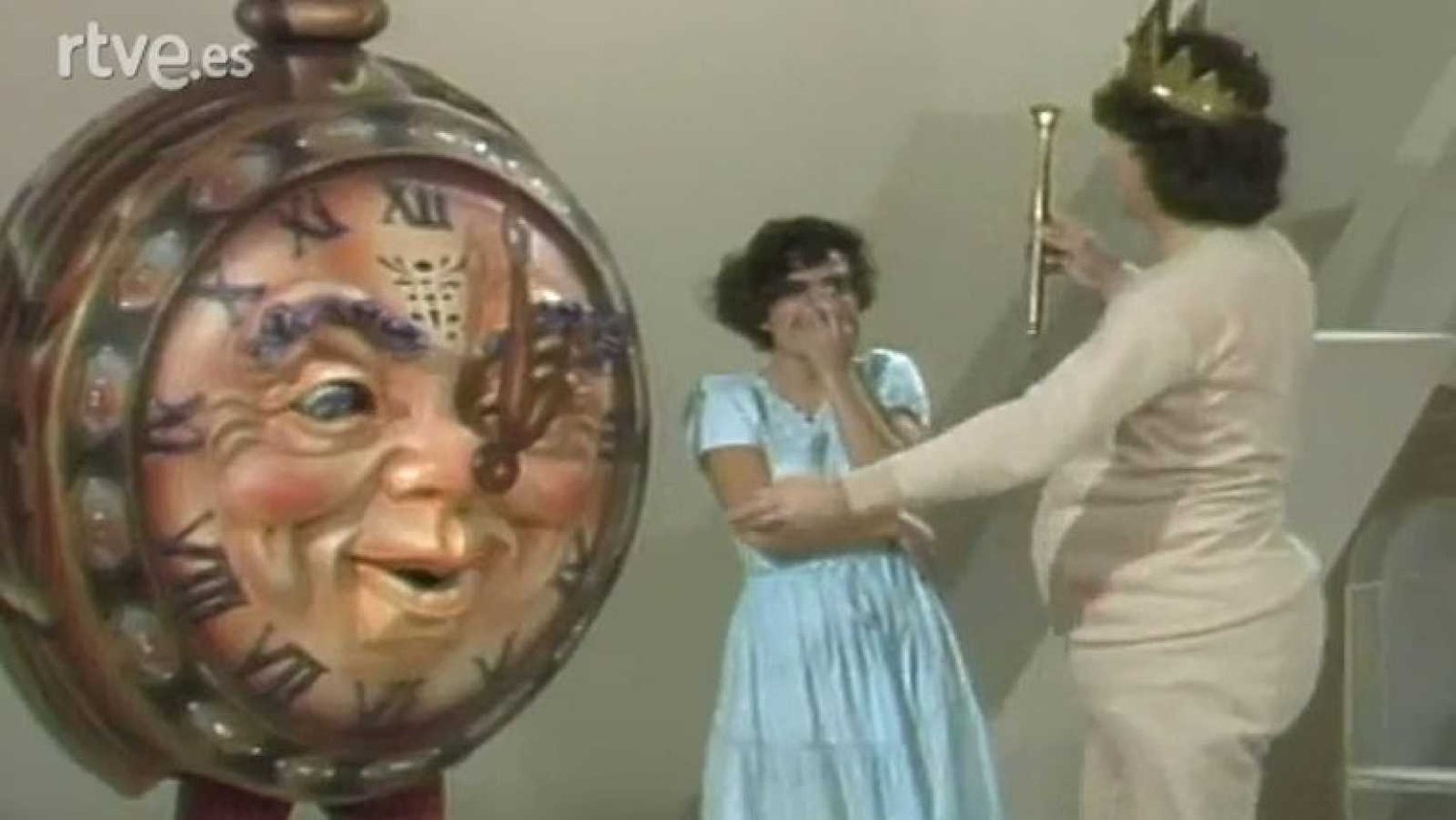
Flip sitting in a transparent armchair on a black-and-white chequerboard floor, surrounded by white cubic volumes
Planeta imaginari: a white studio set, a few wooden cubes and not one concession.

Television and film

TV & Film

He joined TVE in Barcelona in 1974, under the department headed by Sergi Schaaff, and spent twenty-two years as a drama director. In 1975, on an order that came from Madrid, he was dismissed; he came back a year later.

It is worth saying what that salary was for. It was what kept the Sala Villarroel in existence. The four partners worked outside so that they could take nothing inside, and for two decades it was television that paid for the theatre.

Planeta imaginari

Newcomers were given the assignments nobody wanted. He was handed a children's magazine programme with the format already settled: a teacher discussing books, someone singing a song, a little filler. He wanted rid of it. Schaaff told him to do whatever he liked with it.

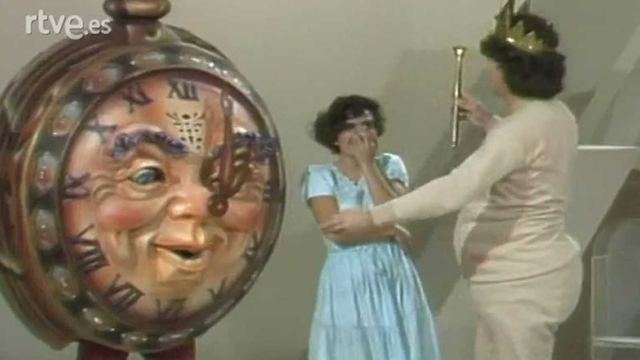
It was the best piece of advice he received in his entire television career. Out of that unwanted assignment came Planeta imaginari: original idea, direction and studio direction by Ángel Alonso Tomás22, with scripts by Miquel Obiols and Josep Maria Vidal and Teresa Soler as Flip.9 The team was completed by Concha Fernández in studio direction and Fernando González Tejedor in production.

Unlike a book, a mobile phone, the cinema or the theatre, television enters the home without being invited. Hence the inescapable responsibility of those who choose its content.32
A children's programme for children does not mean a programme for idiots. Restaurant menus that as a matter of course condemn children to macaroni strike me as just as reprehensible as children's programmes that deprive them of the great achievements of world art.

He threw the whole manual overboard. No realism, no flat colours, no conventional sets. The books were introduced by a learned magician, the central character was treated with a deliberate androgyny and the structure was a network rather than a line. Each programme turned on a theme: colour, paper, water. Or on a name: Magritte, Picasso, Miró, Jules Verne, Lewis Carroll. The theme tune was Debussy's Arabesque no. 1 in the synthesiser version by Isao Tomita.

With no budget to build thirteen sets, he borrowed the idea of the fortress of ice from Superman and had hundreds of wooden cubes made, to be rearranged and repainted for each episode. And above all he drew on what he had around him. A pensioner who made origami and corresponded with the Emperor of Japan. A gardener with the finest bonsai in the country. A retired Renfe train driver who had built an eighty-square-metre model in his house in Girona. And artists who at the time were nobody: La Cubana, Comediants, Juanjo Puigcorbé, Pepe Rubianes, Alaska and La Fura dels Baus, who one day buried themselves in sand with tubes to breathe through and filmed their hands being born as though they were plants.

It began broadcasting in April 1983 from the Sant Cugat studios, in Catalan only, and in March 1984 it moved to the national network of the Primera Cadena. It ended in 1986.

It opened the door to other magnificent programmes such as La bola de cristal, which came after it but with a budget ten times ours. We were abreast of everything, but from a position of humility.

Why he left

He directed the first forty-five episodes, fifteen of them dubbed into Spanish and broadcast on the national channel.22 Then what usually happens when something works happened: TVE increased the budget considerably — he has put it, from memory and with different figures on different occasions, at several times the original.22 He took this as an invitation to go further and proposed to the management that they investigate new aesthetics and new kinds of narrative. The channel preferred to keep the format it had already established.

His answer was to leave, and to leave well. He proposed Miquel Obiols — until then a scriptwriter — as director, his assistant directors as studio directors, and that the rest of the team be kept on. TVE agreed. After a few months of transition, he left the programme he had invented.22

Series and programmes

A l'est del Besòs

TVE Catalunya · 1988 · 13 episodes

He directed all thirteen episodes, co-created the series with Miguel Ángel Nieto and co-wrote the script with Joan Casas. With Anna Lizaran and Joan Borràs.

¿De parte de quién?

TVE · 1993-94 · 13 episodes

He directed all thirteen episodes of this series, written by Miguel Gila, who also starred in it alongside Chus Lampreave. Gila had performed years earlier at the Sala Villarroel, and that is where the encounter came from. The directing challenge lay in bringing into a television studio the mechanics of a monologuist who had spent forty years measuring the timing of laughter on a bare stage, without losing his way of telling along the way.

Misteri

TVE Catalunya · 1983 13 episodes

A mystery drama series with scripts by Joan Manuel Gisbert, directed by him in its entirety. It opened on 7 April 1983 with Els dos adéus de Lucia di Lammermoor and brought together, across thirteen episodes, Pau Garsaball, Sílvia Munt, Montserrat Carulla, Ovidi Montllor, Carme Elias, Alfred Lucchetti, Carme Sansa, Cesc Gelabert, Adolf Bras, Muntsa Alcañiz, Imma Colomer, Montserrat Julió, Joan Borràs and Carme Fortuny.27

Cinema mut

TVE Catalunya · 1978

Direction, with a script by Miquel Obiols and Josep Maria Vidal. It is the first work by the trio who five years later would make Planeta imaginari.27

De carne y hueso

TVE-1 · 1991 · 11 episodes

A series of interviews in the guests' own homes. Those who appeared on it included El Fary, Terenci Moix, Tip, Tony Leblanc, José Luis de Vilallonga, Javier Gurruchaga, Palomo Linares, Fernando García Tola and El Tricicle.

Ocupa't d'Amèlia

TVE · 1984-85 · 3 episodes

Direction of the adaptation of Georges Feydeau, with Juan Margallo, Joan Borràs and Alfred Lucchetti.

Terra d'escudella

TVE Catalunya · 1976-1979

Assistant director on the first children's programme in Catalan, which featured Comediants and Els Joglars.

Función de noche

RTVE · 1995 · 118 min

Direction of the television recording of Muerte accidental de un anarquista, with Paco Morán.

La extraña pareja · Palau Sant Jordi

TV2 · 1999

Broadcast of the farewell performance before 14,797 spectators, transmitted as a special gala.

Film and opera

Nudos

Feature film · 2003 · script

His first film script, with the working title Mediterránea. Directed by Lluís Maria Güell, produced by Ovideo, with Charo López, Héctor Alterio, Goya Toledo and Santi Millán. According to the author himself, the script was selected and given an award by the Ministry of Culture; the specific competition has yet to be confirmed.22

Entry on FilmAffinity

Amadeus

Theatre and opera · 1998 and 2000

His staging of Peter Shaffer's text was a hybrid of theatre and opera: eighteen opera-singing actors on stage, musical direction by Miquel Ortega and music recorded by the Orquestra Filharmònica de la Ciutat de Praga.31 It opened at the Teatre Tívoli in Barcelona and was later taken to the Teatro Nuevo Apolo in Madrid with José Sacristán.

Hitler en su búnker

Opera · project, 2000

With a text by Fernando Arrabal, libretto and direction by Ángel Alonso and music by Miguel Ortega, announced for the Teatro de la Maestranza in Seville.

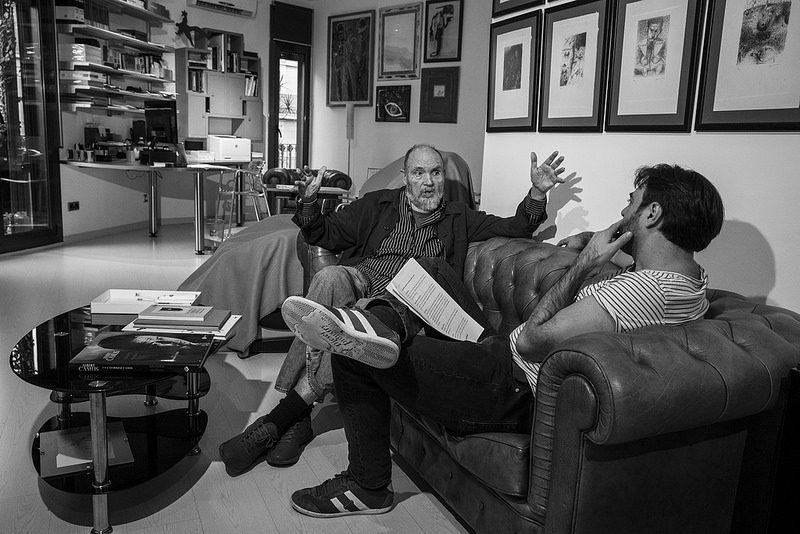
Ángel Alonso sitting in conversation with two people in a room with framed pictures and a low table covered in papers
Forty years teaching the craft, from the Instituto Oficial de RTVE to the Pompeu Fabra.

Teaching and method

Teaching dramaturgy

Anyone who has directed Brecht and Neil Simon with the same seriousness has something to teach about the craft, and he has been doing so for forty years. He began early: in 1984, with Planeta imaginari still on air, the Instituto Oficial de RTVE commissioned from him a hundred-hour course and workshop on directing television drama, aimed at postgraduates, television directors and film directors. The following year he taught Teoría y técnica de la televisión there, and between 1986 and 1988 the interdisciplinary seminar Dramaturgia audiovisual.22

Then came the master's course El guió al cinema at the Universidad Internacional Menéndez Pelayo (2001), the courses in film directing (2003-2004), and two long cycles of seminars for professionals: one on the theory of perception — “Espectador y relato”, “El nuevo espectador” — between 2004 and 2009, and another on comedy between 2005 and 2007, broken down into the genre, the construction of character and the construction of the gag.

From 2007 to 2010 he taught Dramaturgy of the Audiovisual Script on the master's in Television Excellence run by the Universitat Pompeu Fabra and TV3; from 2007 to 2011, at the Instituto Europeo de Diseño, the master's course La dramaturgia de los signos visuales in opera, theatre, film and television. And between 2007 and 2009 he coordinated the debates at l'Espai Bras in La Villarroel, the series that bears the name of his partner of thirty years.22

I should love to be a friend of Salieri's; with Mozart I would go out for a drink.13
Ángel Alonso

The method

My experience as a stage director has greatly influenced the writing of my texts, which I always conceive from the director's point of view, imagining and listening to the staging. When I write adaptations, I work above all on dramatic texts, which I prefer to literary ones. I love the craft and I am very respectful of genre.28
Staging is a manipulation of pre-existing materials that you organise and heighten according to your own tastes and interests.33
Translated from the Catalan

That way of working can be seen throughout his work as an adapter. Of La extraña pareja he said that he had realised “it was not an American play, it was a New York play”, and he rewrote the whole dramaturgy in search of the spectator's empathy.17 Of Madame Bovary, that it took him more than a year to strip the novel bare until he was left alone with Emma.

And on comedy, the genre that brought him his greatest successes and his least recognition:

In drama the results cannot be measured objectively: proposals are choices, and all of them therefore deserve respect. But in comedy the response is immediate and measurable. Do they laugh or not? A gag either works or it does not.32

Bodas de plata

In January 1998, between two comedies for a wide public, he premiered a text of his own performed by Ferran Rañé. Joan-Anton Benach saw something else in it: “Here is the discovery of an Ángel Alonso who, without disowning his creatures, is capable of drawing them with a subtler line, with a more unhurried analysis and through a dramatic prism that is far more effective. Rañé probably gives, in Bodas de plata, the best performance of his career. Do not miss this magnificent celebration.”34

What he has written since

Since 2009 he has been writing. There is a complete body of work that has never reached the stage and that shows, better than any list of premieres, where his loyalties lie: El extranjero, a stage version of the novel by Albert Camus — the book of his life, sixty years on; Madame Bovary, after Flaubert, which did reach the stage in 2016 with Belén Fabra; Miss Julie, by Strindberg; A Doll's House, by Ibsen; The Tempest, by Shakespeare; and three comedies of his own, Pretty Woman, Where is the party and Soy Frida Kahlo, amigas.22

To these must be added film scripts at various stages of production — Hotel Majestic, Las amistades peligrosas, Er Camino Santiago — and a thirteen-episode television series, Real Maharajas Club. And an earlier text that deserves a mention of its own: El Dioni, written about Dionisio Rodríguez Martín and his robbery of a security van.

Audiovisual

Watch and listen

A good part of his television work is preserved in the Arxiu de TVE Catalunya.25 The links lead to the original locations held by each institution or platform, which are their legitimate custodians. Nothing is rehosted here.

Audiovisual archive

RTVE archive

On other platforms

Gallery

The director

Photographs from the personal archive.21

  • Ángel Alonso at the edge of the stage. Personal archive.
  • At the edge of the stage, his place of work for fifty years.
  • In his study.
  • The foyer of the Villarroel in 1998, beneath the banner marking the twenty-fifth anniversary.11
  • A working meeting.
  • Ángel Alonso with Fernando Arrabal. Forty years of association and two world premieres.

The Sala Villarroel

Personal archive.21

Photograph from the Sala Villarroel collection12 photographs The Sala VillarroelView the full album
  • The Sala Villarroel and the companies that passed through its stage.

The first productions

Albums from the personal archive.21

Album page with photographs of the first productions9 photographs The first productionsView the full album

Inquisición · 1980

Photographs of Arrabal's world premiere. Personal archive.21

Production photograph from Inquisición, by Fernando Arrabal, 19809 photographs Inquisición · 1980View the full album
  • Inquisición, by Fernando Arrabal. World premiere at the Sala Villarroel, 1 October 1980.

Freaks · 1984

Production photographs. Personal archive.21

Production photograph from Freaks, 198411 photographs Freaks · 1984View the full album
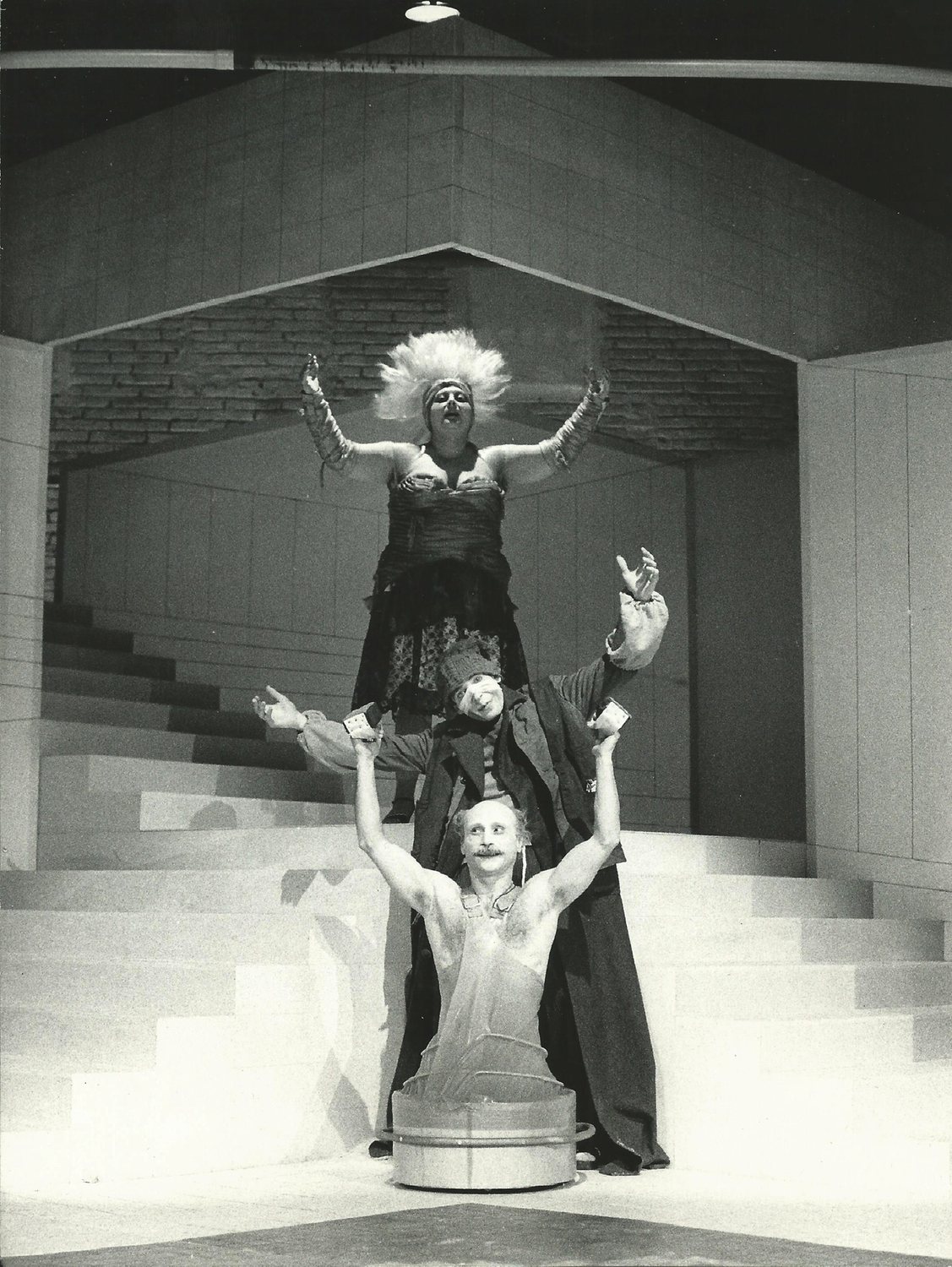
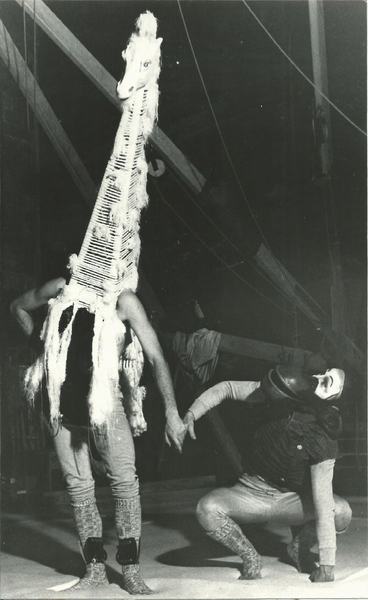
  • Freaks, 1984. The research into the language of comics taken to the stage.

Woyzeck… un altre? · 1982

Album from the personal archive.21

Album page with photographs of Woyzeck… un altre?, 19829 photographs Woyzeck… un altre? · 1982View the full album
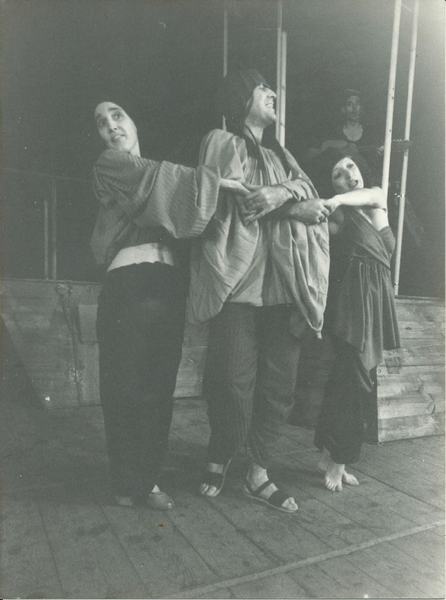
  • Woyzeck… un altre?, 1982. Premiered at the Festival Grec.

Historias de santas y dragones · 1978

Album from the personal archive.21

Album page with photographs of Historias de santas y dragones, 19786 photographs Historias de santas y dragones · 1978View the full album
  • Historias de santas y dragones, 1978, after Anatole France's La isla de los pingüinos.

Jocs · theatre for schools

Personal archive.21

Photograph of the schools show Jocs11 photographs Jocs · theatre for schoolsView the full album
  • Jocs, the schools show for the La Caixa a les escoles campaign.

Lysistrata · 1996

Personal archive.21

Photograph and costume designs for Lysistrata, 19969 photographs Lysistrata · 1996View the full album
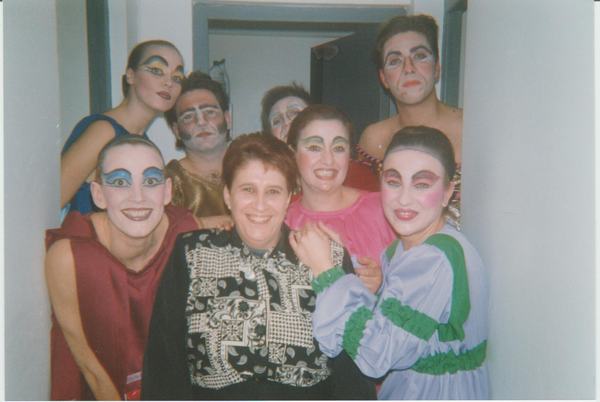
  • Lysistrata, 1996. Production photographs and costume designs.

Boom! · 1996

Personal archive and material from Chapertons.

Production photograph from Boom!, by Chapertons8 photographs Boom! · 1996View the full album
  • Boom!, 1996, by Chapertons. More than four hundred performances all over the world.

Comedy: Morán and Pera

Personal archive.21

Photograph of the productions with Paco Morán and Joan Pera8 photographs Comedy: Morán and PeraView the full album
  • Ten years and four shows with Paco Morán and Joan Pera.

Historias de la puta mili

Personal archive.21

Production photograph from Historias de la puta mili16 photographs Historias de la puta miliView the full album
  • Historias de la puta mili, after Ivà's comic strip. Produced by Catalana de Gags.

Er Camino Santiago · 2009-2011

Personal archive.21

Photograph of Er Camino Santiago, with Jordi LP5 photographs Er Camino Santiago · 2009-2011View the full album
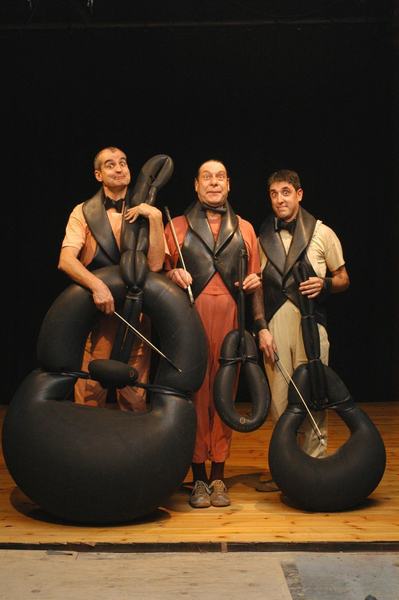
  • Er Camino Santiago, 2009-2011, with Jordi LP and twenty-five characters.

Amadeus and other productions

Personal archive.21

Production photograph from Amadeus, 19987 photographs Amadeus and other productionsView the full album
  • Amadeus, 1998, and other productions of the 1980s and the 2000s.

Madame Bovary · 2016

Photographs by Gloria Giménez and costume designs for the production. Personal archive.21

Photograph of Madame Bovary, with Belén Fabra, and costume designs for the production6 photographs Madame Bovary · 2016View the full album
  • Madame Bovary. Una cuestión de género, 2016, with Belén Fabra. Photographs by Gloria Giménez.

Planeta imaginari

Stills from the Arxiu de TVE Catalunya.26 Rights held by RTVE.

Still from Planeta imaginari10 photographs Planeta imaginariView the full album
  • Planeta imaginari, TVE, 1983-1985. Stills from the Arxiu de TVE Catalunya.

Posters

Originals from the personal archive.21

  • Poster for Amadeus. Directed by Ángel Alonso, musical direction by Miquel Ortega, with Lluís Soler, Roger Pera, Olalla Moreno and eighteen opera-singing actors. Music recorded by the Orquestra Filharmònica de la Ciutat de Praga. A Focus production in collaboration with the Teatre Fortuny in Reus.31
  • Poster for Tormentos y delicias de la carne, by Arrabal. Centre d'Investigació Teatral for the Sala Villarroel. Directed by Ángel Alonso; Joan Borràs as Ignatius; set and costumes by Joan Cruspinera.23
  • Poster for Historias de la puta mili en Irak, Teatre Club Capitol, 28 October to 14 December 2003. Graphic design by Yago Alonso Giménez.24
  • Poster for Madame Bovary. Una cuestión de género, adapted and directed by Ángel Alonso, with Belén Fabra.
  • Poster for El extranjero (The Outsider), his stage version of the novel by Albert Camus.
Ángel Alonso leaning against the doorframe of his study, with shelves and a work table behind him
He speaks well, and with an edge. This is a selection of what he has said.

Interviews and press

In his own words

Interviews given to press, radio and television, and articles published about his work. The links lead to the original outlets.

A selection of quotations

On comedy and official culture

“My great commercial and box-office successes have been comedies, and in this country of Judaeo-Christian roots comedies are not accepted as culture; here, making people laugh is not culture — culture is supposed to be suffering.”

On access to culture

“Nobody is uncultivated by choice or by vocation. The great aspiration of working people all over the world has always been access to culture, even the canonical kind.”

On Ivà

“He was a genius at pinning down the tensions in the air and in society; nobody knew better how to turn them into humour. He could sum up in a single frame the brutality and the absurdity of compulsory military service and have you dying of laughter — he exorcised it.”

On Arrabal

“It says a great deal that the most widely performed playwright in the world should be known in his own country, Spain, only for getting drunk on television.”

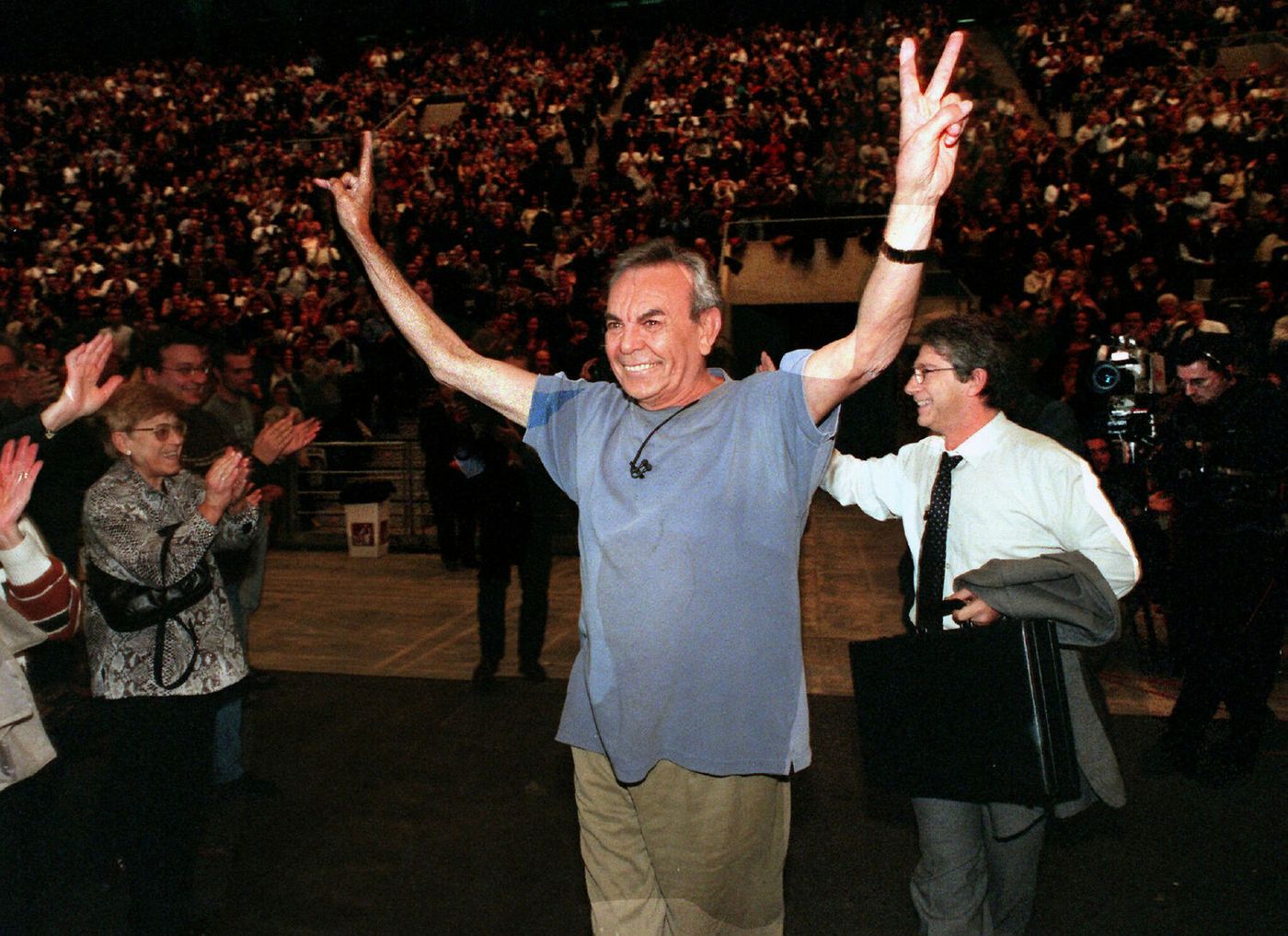
Ángel Alonso on stage with his arms raised, taking a bow before a packed audience
The final curtain call before the audience. The recognition came from the side he was not expecting.

Recognition

Awards

Recognition came early and from the quarter he least expected: a children's programme they had wanted to get rid of and that he turned into a success brought him, within two years, an international prize, an honourable mention and a Ciudad de Barcelona award. The trophies are still in his home. The 1984 one is signed by Josep Maria Subirachs.

Awards he received personally or as a representative: the three awards for Planeta imaginari, and the 1999 Serra d'Or, awarded to the Sala Villarroel.

  • Premio Max de Teatro for best costume design 1999 · Awarded to the production of Amadeus, as stated on the poster for the Teatro Nuevo Apolo in Madrid. It is not a personal award to him.31
  • Premi Nacional d'Activitats Teatrals 1984 · Sculptural trophy signed by Josep Maria Subirachs.21
  • Premio Platero de Televisión 1984 · Festival Internacional de Cine y Televisión de Gijón, international jury of the music and variety section, for the best children's programme, for the episode “Nonsense: a tribute to Lewis Carroll” of Planeta imaginari. The competing entries included the United States, Italy, Norway, Czechoslovakia and Poland.8
  • Honourable Mention 1983 · Festival Internacional de Cine y Televisión de Gijón, for Planeta imaginari.8
  • Premio Ciudad de Barcelona Barcelona City Council, for the best children's television programme, for Planeta imaginari. Attested before July 1984.8
  • V Premio Pablo Iglesias 1983 · Agrupación Socialista de Chamartín, PSOE.21
  • Premi Crítica Serra d'Or 1999 · Awarded to the Sala Villarroel.21
  • Guinness World Record 27 November 1999 · World record for the largest number of tickets sold for a single theatre performance: 14,797 seats at the Palau Sant Jordi, for the farewell of La extraña pareja.15
  • Distinction at the Premis FAD Sebastià Gasch For Braguetes (1992). It does not appear as a main award in either the 1992 or the 1993 edition; the archive records it as a distinction pending confirmation of its exact category.21
  • SGAE tribute For fifty years devoted to creation.
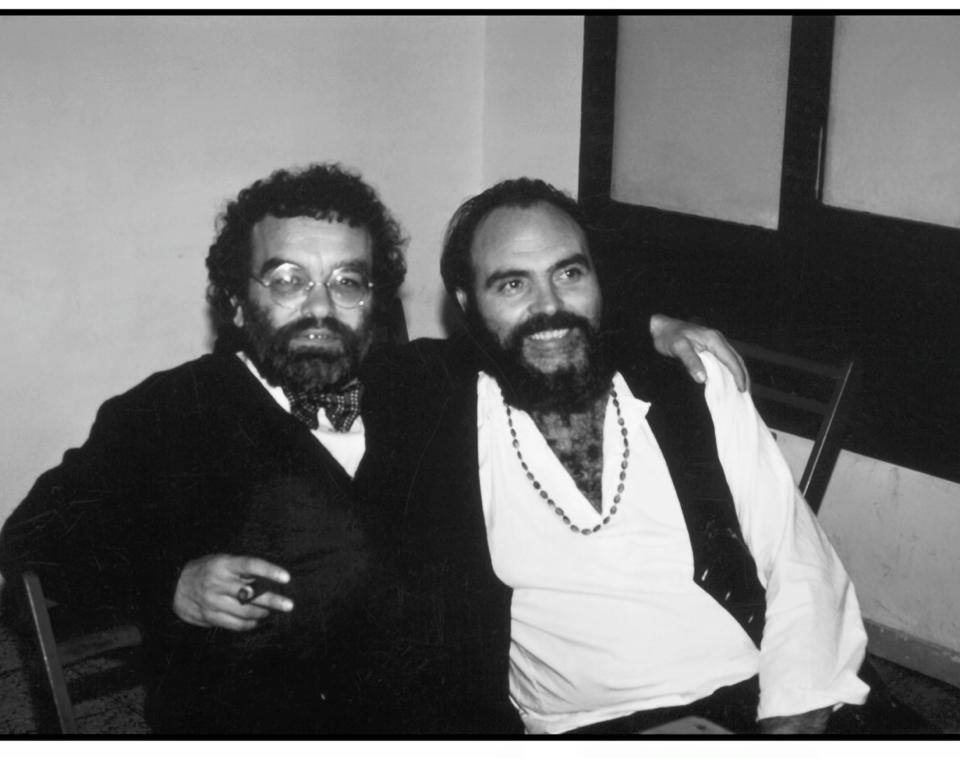
Two bearded men sitting side by side and smiling, in black and white: Fernando Arrabal, in round glasses and with a cigar, and Ángel Alonso
With Fernando Arrabal. A career is, above all, the people it was made with.

Connections

Who he worked with

A sixty-year career is not a list of titles: it is a network of people. Authors whose work he premiered, actors to whom he gave a first part, partners with whom he kept a theatre going for three decades, collaborators who later became names in their own right. This is, in part, the roll call.

And there is one name that belongs in both columns, work and life: his son Yago Alonso Giménez, who designed the sets for several of his productions — among them Bodas de plata — and the graphic and advertising campaigns for shows such as Popcorn and Historias de la puta mili en Irak, and who worked with him on the writing of some of his scripts.

  • Yago Alonso Giménez
  • Fernando Arrabal
  • Ivà (Ramon Tosas)
  • Miquel Obiols
  • Josep Maria Vidal
  • Paco Morán
  • Joan Pera
  • Cesc Gelabert
  • Benet Casablancas
  • Nazario
  • Carme Sansa
  • Sergi López
  • Loles León
  • Amparo Moreno
  • Ferran Rañé
  • Belén Fabra
  • Gloria Giménez
  • Daniel Martínez de Obregón
  • Sergi Schaaff
  • Lluís Maria Güell
  • Mercè Vilaret
  • Adolf Bras
  • Alfons Guirao
  • José Antonio Ortega
  • Rafael Gil
  • Marta Carrasco
  • Antonio Belart
  • Joan Cruspinera
  • Jordi LP
  • Teresa Soler
  • Marta Calvó
  • Lluís Soler
  • José Sacristán
  • Anna Lizaran
  • Miguel Gila
  • Chus Lampreave
  • Charo López
  • Feliu Formosa

Frequently asked questions

What people usually ask

An archive exists to answer questions. These are the ones asked most often, with the answer and the source.

Who is Ángel Alonso Tomás?

Ángel Alonso Tomás (Carenas, Zaragoza, 24 January 1942) is a Spanish theatre director, playwright, screenwriter and television director. He founded and ran the Sala Villarroel in Barcelona from 1972, devised and directed the children's programme Planeta imaginari for TVE, and directed the first two world premieres of Fernando Arrabal in Spain. He premiered seventy-eight productions between 1962 and 2016.

Who created the programme Planeta imaginari?

The original idea, the direction and the studio direction of Planeta imaginari (TVE, 1983-1985) are by Ángel Alonso Tomás. The scripts were written by Miquel Obiols and Josep Maria Vidal, and Teresa Soler played Flip. Alonso directed the first forty-five episodes and, on leaving the programme, proposed Obiols as director.922

What was the Sala Villarroel?

A theatre on Carrer Villarroel in Barcelona, opened in 1972 in a parish hall and known today as Villarroel Teatre. The Centro de Documentación de las Artes Escénicas describes it as one of the most important presenting venues of Spanish independent theatre, alongside the Sala Cadarso in Madrid. It was run by a cooperative of four people — Ángel Alonso, Adolf Bras, Alfons Guirao and José Antonio Ortega — and in twenty years it programmed 207 shows.1410

When was a bomb planted at the Sala Villarroel?

On 5 February 1977, half an hour into the evening performance, an explosive device went off in the foyer of the theatre. Playing that night was La sangre y la ceniza, by Alfonso Sastre. Nobody was injured. The attack was claimed by the Alianza Apostólica Anticomunista, the far-right Triple A, and the performance resumed ten minutes later at the audience's request.3

Who directed the first world premiere of Fernando Arrabal in Spain?

Ángel Alonso Tomás, with Inquisición, which opened at the Sala Villarroel on 1 October 1980. It was the first world premiere, commercial and absolute, of a play by Arrabal in Spain. There was a second in 1987: Tormentos y delicias de la carne. On receiving the Premio Nacional de Teatro in 2001, Arrabal dedicated the award to Alonso, among others.419

What is the Guinness World Record for La extraña pareja?

On 27 November 1999, the farewell performance of La extraña pareja at the Palau Sant Jordi in Barcelona drew 14,797 spectators, a Guinness World Record for the largest number of tickets sold for a single theatre performance. The production, directed by Ángel Alonso, had spent five years at the Teatre Borràs with more than two thousand performances and 1,123,797 spectators.1522

Who directed Historias de la puta mili?

Ángel Alonso Tomás was responsible for the version and the direction of the show based on the comic strip by Ivà (Ramon Tosas). No production company would finance it, so he mortgaged his flat and produced it himself through his own company, Catalana de Gags. There were three instalments between 1990 and 1994, more than a thousand performances and some 450,000 spectators, and a fourth in 2003 against the Iraq war. Alonso was not involved in the film or the television series of the same name.2224

How many productions did he direct and how many spectators did he have?

He premiered seventy-eight productions, twenty-two of them with texts of his own. His list of performances, counted one by one, gives 7,843 performances, of which 6,821 with recorded box office, and 2,823,848 recorded spectators; adding the performances with no audience record, estimated attendance exceeds 3,400,000.22

How do you request the performance rights to his plays?

Licences are handled through the SGAE. For enquiries about particular texts, archive material or the reproduction of images, the contact form on this site can be used.

How do you cite this archive?

Archivo Ángel Alonso Tomás, section consulted, and the date of consultation. Every fact on the site refers to a numbered note with its documentary source, so it is preferable to cite the original source when one is available.

Contact

Write to the archive

This archive is maintained by the family. If you would like to request the performance rights to one of his texts, consult or reproduce material, offer a photograph, a programme or a missing cutting, or correct a detail, write to us here.

Las licencias de representación se gestionan además a través de la SGAE.

If you are enquiring about a particular work, please give the title and the year.

Solve the sum to confirm that you are not a robot.

Critical apparatus

Notes

Each number in the text refers to the corresponding documentary source. The press references come from originals held in the archive. The production photographs belong to the personal collection; the television stills are the property of RTVE and are reproduced here for documentary purposes, on a non-profit basis and with their origin indicated.

  1. Villarroel Teatre: 25 anys de «La Sala», 1973-1998, edited by Joan Anton Benach. Institut del Teatre de la Diputació de Barcelona, 1998.
  2. “Los cine-clubs” section, 19 February 1971, p. 29. La Vanguardia newspaper archive.
  3. La Vanguardia: report on the bomb attack on the Sala Villarroel, 8 February 1977, p. 19.
  4. La Vanguardia: “World premiere in Barcelona”, a piece published on the opening day of Inquisición, 1 October 1980, p. 51.
  5. Joan de Sagarra, review of Inquisición under the subheading “An extraordinary show”. La Vanguardia, 3 October 1980, p. 46.
  6. La Vanguardia: report on Fernando Arrabal's visit to the Sala Villarroel, 25 October 1980, p. 48.
  7. Fernando Arrabal, the author's own note on Tormentos y delicias de la carne, written for La Vanguardia to mark the world premiere, 1987.
  8. La Vanguardia: report on the Festival Internacional de Cine y Televisión de Gijón, 15 July 1984, p. 74.
  9. Credits for Planeta imaginari in the television listings of La Vanguardia: 19 and 26 August and 16 December 1985. They correspond to repeats of episodes from the first seasons.
  10. La Vanguardia: “The Villarroel turns 20”, 20 November 1992.
  11. Santiago Fondevila, report on the twenty-fifth anniversary of the Villarroel Teatre. La Vanguardia, 19 February 1998, p. 40.
  12. José Martí Gómez, “A reporter's diary”, Revista La Vanguardia, 22 March 1998.
  13. La Vanguardia: interview to mark the opening of Amadeus at the Teatre Tívoli, 23 December 1998.
  14. Gonzalo Pérez de Olaguer, “The theatre of the independents”. Centro de Documentación de las Artes Escénicas y de la Música, INAEM, Ministerio de Cultura.
  15. Guinness World Record mundial de mayor número de entradas vendidas de una función teatral, 27 de noviembre de 1999. Ficha del Ajuntament de Barcelona; previa de El País (25 de noviembre de 1999) y El Periódico (18 de marzo de 2014).
  16. Interview in Jot Down, diciembre de 2018.
  17. Jordi Sabaté, interview in elDiario.es, 2025.
  18. Fernando Arrabal, Inquisición: premiere details recorded in the published edition of the text, p. 34.
  19. Speech by Fernando Arrabal on receiving the Premio Nacional de Teatro, November 2001.
  20. Documentary account of theatre in Catalonia compiled from the newspaper archive of La Vanguardia, 1970-2000.
  21. Personal archive of Ángel Alonso Tomás: programmes, contracts, correspondence, photographs and original trophies.
  22. Ángel Alonso Tomás, “Trayectoria profesional” (Professional career): a typewritten list of shows, performances and audience figures, compiled and kept up to date by the author. Personal archive.
  23. Poster for Tormentos y delicias de la carne, Centre d'Investigació Teatral · Sala Villarroel, 1987. Original held in the personal archive.
  24. Poster for Historias de la puta mili en Irak, Catalana de Gags · Teatre Club Capitol, Sala 1, 28 October to 14 December 2003. Personal archive.
  25. Arxiu de TVE Catalunya, RTVE. Los materiales audiovisuales se enlazan a su alojamiento original.
  26. Stills from Planeta imaginari from the Arxiu de TVE Catalunya. Rights held by RTVE.
  27. Records for Misteri (1983) and Cinema mut (1978): list of episodes and casts from the personal archive, checked against the IMDb entries.
  28. Ficha de autor de la Associació d'Escriptors en Llengua Catalana y Contexto Teatral.
  29. Muerte de Ramon Tosas, Ivà, en accidente de tráfico. El País, 23 de julio de 1993; ficha de autor de Humoristan.
  30. Poster for Amadeus, Teatre Tívoli, 1998. A Focus production in collaboration with the Teatre Fortuny in Reus. Original from the personal archive.
  31. Ángel Alonso Tomás, Mis recuerdos (My memories): unpublished memoirs. Personal archive.
  32. Lluís Bernat, interview with Ángel Alonso and chronology of his stage work. Unpublished document in Catalan, personal archive.
  33. Joan-Anton Benach, review of Bodas de plata. La Vanguardia, 19 January 1998, p. 34.
  34. Joan-Anton Benach, review of La jaula de las locas. La Vanguardia, 4 January 2000.
  35. Eugenio Madueño, “Living in Barcelona”. La Vanguardia, 31 January 1999; and José Martí Gómez, La Vanguardia Revista, 2 May 1999.
  36. Santiago Fondevila, review of Matar al presidente. La Vanguardia, 15 December 2004.
  37. La Vanguardia: opening of Amadeus at the Teatre Fortuny in Reus, 15 November 1998; and the Madrid opening, 7 March 2000.
  38. Grup Focus: fichas de producción. La empresa, fundada por Daniel Martínez de Obregón en 1986, reúne los teatros Romea, Condal, Goya y La Villarroel.
  39. Venue record and professional record from the CDAEM–INAEM, and El teatro independiente en España, 1962-1980.

Documentation

Sources

In addition to the notes, the contents of this website have been compiled from the personal archive of Ángel Alonso Tomás and from the following collections:

  1. Villarroel Teatre: 25 anys de «La Sala», 1973-1998, edited by Joan Anton Benach, Institut del Teatre, Diputació de Barcelona, 1998.
  2. Centro de Documentación de las Artes Escénicas y de la Música (CDAEM–INAEM, Ministry of Culture): professional record, venue record and El teatro independiente en España, 1962-1980.
  3. Newspaper archive of La Vanguardia, 1977-2018.
  4. Associació d'Escriptors en Llengua Catalana · Teatre Nacional de Catalunya · Ajuntament de Barcelona · Fundación SGAE.
  5. Interviews published in elDiario.es, Jot Down, Ovejas Muertas and Revista Almiar.
  6. IMDb, FilmAffinity, teatro.es, teatrebarcelona.com and Contexto Teatral.

Las licencias de representación de sus textos se gestionan a través de la SGAE.